

Porcelain and ceramic tile are among the most popular flooring choices in Arizona kitchens. With our warm climate, busy households, and constant foot traffic, kitchen tile offers a practical and durable solution that holds up well in everyday life. Tile does not stain the way natural stone can, it does not swell or warp like wood, and modern porcelain can mimic the look of wood or stone without any of the usual weaknesses. Despite these advantages, many homeowners still struggle with effective kitchen tile cleaning and often find it difficult to keep their kitchen tile and grout looking clean. The tile surface stays beautiful and resilient, but the grout often darkens, stains, or collects buildup over time. In most kitchens, this happens not because the floor is neglected, but because of the cleaning products and methods used.
Why Kitchen Tile Is One of the Easiest Surfaces to Clean
Porcelain and ceramic tiles are engineered to make cleaning simple. These tiles have a baked-on finish called a glaze, which creates a smooth, non-porous surface. Spills from cooking, splashes from the sink, greasy residue, and accidental food drops cannot penetrate the tile face. As a result, tile is naturally resistant to staining and discoloration.
The benefits of kitchen tile:
Strong protection against spills
Oil, sauces, and acidic foods stay on the surface instead of seeping into the material.
Heat and moisture resistance
Kitchen environments often involve steam, water, and temperature changes. Tile handles these effortlessly.
Easy cleaning with basic products
Most tile can be cleaned with warm water and light agitation. Harsh chemicals are rarely needed.
Long-term durability
High foot traffic, pet activity, dropped utensils, and daily kitchen use do not easily damage porcelain or ceramic tile.
This makes tile a smart choice for any kitchen. The challenge appears when we look at the spaces between the tiles.
Why Kitchen Grout Gets Dirtier Faster Than Any Other Room
The kitchen floor experiences the highest concentration of daily messes. Cooking oils float through the air, small food particles drop to the ground, spills happen often, and people walk through the space constantly. While the tile itself repels much of this debris, the grout lines absorb it.
Grout is porous by design. Those tiny pores collect oils, moisture, dust, and soil that your mop does not fully remove. Over time, these tiny deposits build up into noticeable discoloration.
Kitchen-specific factors that cause grout to dirty quickly:
Grease and oil residue from cooking
Even if you do not see it, microscopic grease particles settle onto the floor every time you cook. This residue gets pushed into grout by mops and cleaning pads.
High foot traffic
The kitchen is the busiest room in most homes. Shoes and socks carry dirt from other rooms directly into grout lines.
Frequent spills
Juice, sauces, broth, crumbs, and splatter settle into the grooves of the floor. Tile resists them, but grout absorbs them.
Cleaning habits that push dirt into grout
Most homeowners do not realize that mopping moves dirty water around the floor rather than removing it. The lowest points on the floor are the grout joints, where dirty water settles and dries.
Each of these small contributions adds up over weeks and months, eventually creating the dark, dingy grout most homeowners struggle with.
How Common Cleaning Methods Make Kitchen Tile Look Dirtier
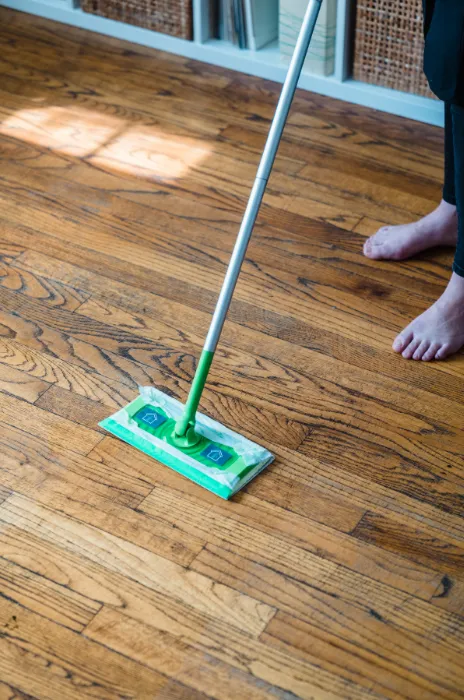 Most people want their kitchen floor to be as clean as possible, so they choose strong cleaning products or specialized mops. Unfortunately, these products often create the opposite effect because of how they interact with tile and grout.
Soapy cleaners create sticky residue
Many kitchen cleaning products contain detergents. These detergents stick to the tile surface and leave behind an invisible film. This film attracts dirt and dust, which adhere to the residue, making the tile look dull or hazy.
Every time you mop, more residue builds up.
Dirty mop water ends up in grout lines
String mops, sponge mops, and reusable pads soak up some of the dirt but leave behind a significant amount. As you move across the floor, you are unintentionally pushing dirty water into the grout joints.
Once the water evaporates, the dirt remains trapped.
Spray mops only clean the surface
Tools like Swiffer-style mops are helpful for dust and light cleaning, but they do not extract soil. They move debris from one area to another and allow moisture to settle in the grout.
The result
Tile stays relatively clean, but the grout becomes progressively darker. Homeowners often assume grout stains are permanent, but in most cases, they are simply layers of built-up soil and detergent residue that can be properly removed.
Why Professional Kitchen Tile and Grout Cleaning Works Better
Deep cleaning kitchen tile and grout requires specialized equipment that homeowners do not typically have. Professional steam-based extraction tools are designed to break apart grime and fully recover dirty water from grout lines.
Here is why professional results are so different:
High-powered grout extraction
Professionals use pressurized tools that flush grout pores and extract soil rather than moving it around.
Products that remove residue
pH-balanced cleaners dissolve detergent films and grease without damaging grout or tile coatings.
Uniform cleaning across the entire floor
Spot cleaning with household tools creates uneven results. Professional cleaning restores the entire kitchen surface consistently.
Longer-lasting cleanliness
Once residue is removed, the tile and grout stay cleaner longer because the grout no longer attracts dust and oils.
How to Keep Kitchen Tile Clean After a Professional Cleaning
You can keep your kitchen floor looking fresh with small changes to your daily and weekly cleaning routine.
Use a neutral cleaner
Avoid anything with soap or heavy fragrance. Neutral cleaners lift soil without leaving a film.
Rinse with clean water
A quick rinse after mopping helps prevent detergent or residue buildup.
Use a microfiber mop
Microfiber grabs dirt instead of pushing it into grout.
Wipe spills quickly
Especially oils, sauces, and anything acidic that could discolor grout over time.
Seal your grout
A properly sealed grout line resists absorption and keeps moisture and debris on the surface, where it is easier to clean.
Avoid harsh chemicals
Many products labeled “heavy duty” do more harm than good, leaving sticky residue that attracts more soil.
Good habits go a long way in keeping kitchen tile fresh, bright, and easy to maintain between professional cleanings.
Final Thoughts
Kitchen tile is one of the easiest flooring surfaces to maintain, but grout can be a challenge without the right cleaning methods. Regular mopping, the wrong products, and high kitchen traffic all contribute to soil buildup that settles into grout lines and causes noticeable discoloration.
The good news is that this buildup is entirely reversible. With professional tile and grout cleaning, homeowners can restore the fresh, clean appearance of their kitchen floor and start with a clean slate. With proper maintenance, the floor can stay beautiful and resist grime much longer.


